

If you will snorkel a few times a year, buy a complete set from a known maker and check the mask fit first. If you plan to learn scuba, buy a good mask and fins of your own and rent the rest until you know what you like. Mask fit is the part that decides whether you enjoy the water.
Start with the mask
A mask that leaks is miserable. Test the fit by placing it on your face without the strap, inhaling gently through your nose and letting go. If it stays in place for a few seconds, the skirt matches your face. Facial hair under the seal can break it, so shave or use a small amount of silicone grease.
Look for tempered glass lenses on a dive mask. Many snorkeling masks use polycarbonate, which is lighter but scratches more easily. Low volume masks sit close to the face and are easier to clear and equalize if you dive. Wide, panoramic masks give a bigger view and suit casual snorkeling.
The Scubapro Solo is a single lens mask with a low profile that many divers use. The Speedo Adventure Series mask is a lower cost choice for snorkeling and vacations.

Scubapro
SCUBAPRO Solo Single Lens Scuba Dive Mask
The SCUBAPRO Solo is a single lens dive mask built for recreational scuba and travel diving. Its low-volume frameless design gives you a wide view underwater without a lot of air space to clear.

Speedo Adventure Series Snorkel Dive Mask, Black, Large/X-Large
This Speedo mask is a snorkel and dive set in black, sized Large/X-Large. It has polycarbonate lenses with an anti-fog coating, a liquid silicone skirt and a splash resistant snorkel top.
Dry snorkel or classic
A classic snorkel is a simple tube. A dry top snorkel has a float valve at the top that blocks splashes, which makes it easier for beginners. A dry top snorkel with a purge valve at the bottom makes clearing water easier.
Try the mouthpiece before you buy, because a hard piece can tire your jaw. A silicone mouthpiece in the right size helps you relax on longer swims.
Complete sets
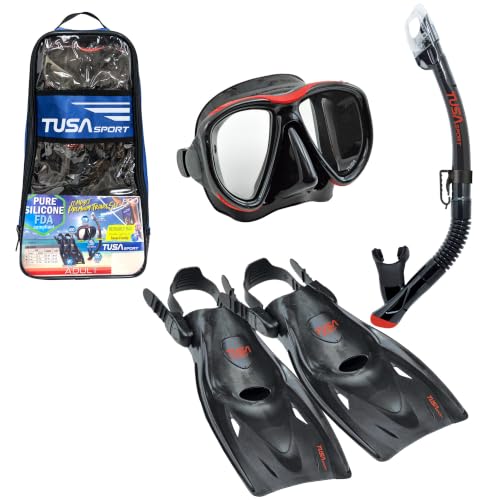
A full set bundles a mask, snorkel and fins in a bag, which is the easy way to start. The TUSA Sport Powerview set includes a mask with a wide lens, a dry snorkel and open fins. The Cressi Palau is a compact set that packs well for travel.
Tusa
TUSA Sport Powerview Mask, Dry Snorkel and Fins Set
This TUSA set gives you a mask, a dry snorkel and a pair of fins in one travel kit, all in a medium size in black and red. It is built for snorkeling trips where you want to pack light and still have gear that fits well and stays dry.

Cressi
Cressi Palau SAF Snorkel Set in Blue L/XL
This Cressi set gives you a mask, snorkel and fins in one compact bag that fits easily into a day pack. It suits snorkeling, swimming, body surfing and boogie boarding, so it covers most of your time in the water.
The TUSA Platina is another full set with a more refined mask and snorkel than the entry level kits that fill online shops. The Cressi F1 and Supernova is a mask and snorkel set without fins, so add fins separately.

Tusa
TUSA Sport Platina Hyperdry Mask, Snorkel and Fins Set
This TUSA Sport set bundles a mask, snorkel and fins in clear blue, so you get everything for the water in one package. It is sized large, which matters if you want the mask to sit comfortably on your face.

Cressi
Cressi F1 and Supernova Dry Mask and Snorkel Set, White
This Cressi set pairs a frameless mask with a dry top snorkel, so you get a clear view and a snorkel that stays out of the way. It is a solid pick if you want an easy, no-fuss kit for snorkeling.
Fins
Fins come with a full foot pocket or an open heel with a strap. Full foot fins are light and good for warm water and bare feet. Open heel fins use a boot and fit scuba and cold water, which is why most divers use them.
The Scubapro Go Travel fin is an open heel design that folds smaller for luggage. It has a short blade that suits divers who travel with carry on bags.

Scubapro
SCUBAPRO GO Travel Scuba Fin Set, Open Heel, White
These SCUBAPRO GO travel fins are built to pack small. The blades interlock into one snug pair, so they fit neatly in IATA carry-on compliant luggage when you head out for a dive or snorkel trip.
Size fins so that your foot sits snugly without pinching. Flip them in a pool or on a quiet beach and check for cramps in your calves.
When a dive computer makes sense
A dive computer tracks depth, time and how much nitrogen your body has absorbed, so you can follow safe limits. If you dive more than a few times a year, it is worth owning one. Some divers like a wrist unit, and others like a console.
The Suunto D5, the Garmin Descent G2 and the Mares Puck Pro all show depth and dive time on a wrist display. Learn the settings from your instructor and from the manual before you use one on a real dive.

SUUNTO D5 Dive Computer, Color Display, All Black
The Suunto D5 is a dive computer built for scuba divers and freedivers who want tracking, alerts and navigation on one wrist unit. It works with a wireless tank pressure transmitter, so you can keep an eye on your air without checking a gauge.
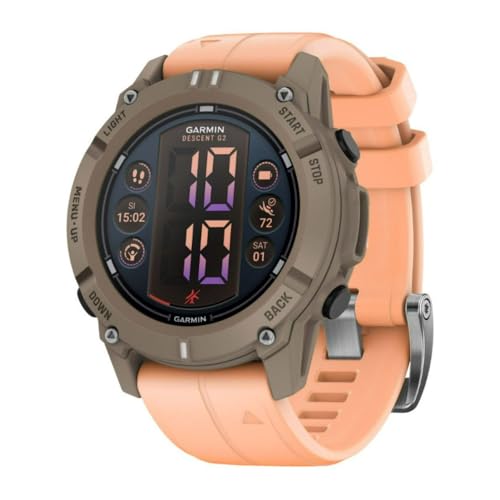
Garmin Descent G2 Dive Computer Watch Paloma
The Garmin Descent G2 is a watch-style dive computer with a 1.2 inch AMOLED display, a sapphire lens and a 10 ATM dive rating. It works for recreational, advanced, technical, freediving and pool apnea sessions, and it doubles as a smartwatch for everyday wear.

Mares Puck Pro Ultra Dive Computer
The Mares Puck Pro Ultra is a dive computer that tracks depth, time, decompression, temperature and your air or Nitrox mix. It has a high-contrast screen so you can read your numbers easily, even when the water gets murky.
Learning to dive
Take a course with a certified instructor before you go beyond snorkeling depth. Scuba needs training in buoyancy, equalizing and safety procedures. Many resorts offer a one day introduction, and full open water courses take several days.
Packing for travel
Pack the mask in a hard case or wrap it in clothes so the lens does not crack. Put fins in the center of your bag with soft items around them. Many travelers carry the mask, snorkel and dive computer in a carry on and put bulky fins in checked luggage.
Use reef safe habits whatever gear you choose. Do not stand on coral, keep your fins off the bottom and avoid touching marine life. A floating vest or a brightly colored tow float helps boats see you.
Rinse your gear in fresh water after each trip and dry it out of direct sun. Store the mask in its case so the skirt does not deform. Good care makes a set last for years.


